Cas12a Nuclease is an RNA-guided genome-editing enzyme that recognizes T-rich PAM sequences and generates staggered DNA cuts with sticky ends. Its precise targeting and streamlined guide-RNA requirements make it ideal for gene knockout, targeted DNA modification, multiplex editing, and a wide range of CRISPR research applications.
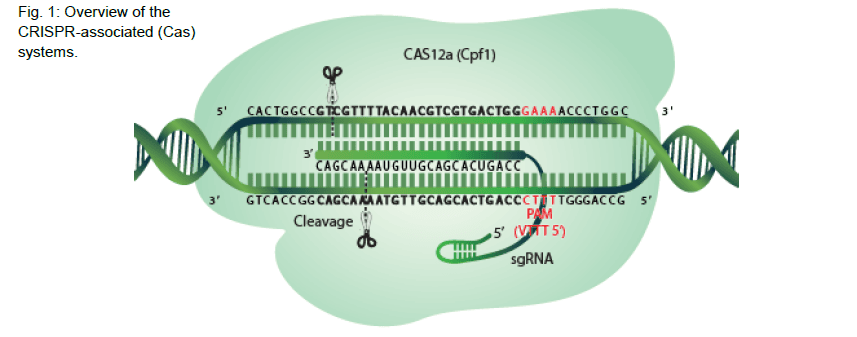
Clustered regularly interspaced short palindromic repeats (CRISPR)/CRISPR-associated (Cas) systems provide bacteria and archaea with adaptive immunity against viruses and plasmids by using CRISPR RNAs (crRNAs) to guide the silencing of invading nucleic acids (1). The CRISPR system consists of a short non-coding guide RNA (sgRNA) made up of a target complementary CRISPR RNA (crRNA) and an auxiliary transactivating crRNA (tracrRNA). The sgRNA guides the Cas12a (Cpf1) endonuclease to a specific genomic locus via base pairing between the crRNA sequence and the target sequence and cleaves the DNA to create a “sticky” double-strand break with a four base pair overhang, which is different from the Cas9 generated blunt end break. The location of the break is within the target sequence 18 bases from the TTTV (V is A, C or G) PAM (Protospacer Adjacent Motif) (2). The PAM sequence must precede the targeted region on the opposite strand of the DNA with respect to the region complementary sgRNA sequence (Fig.1).
Product Source
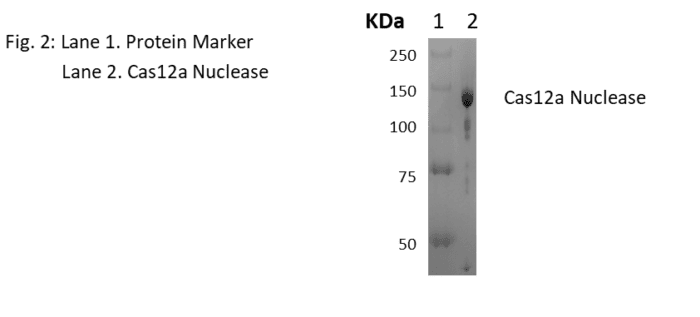
E. coli BL21 (DE3) strain expressing a Cas12a (Cpf1) gene from Francisella tularensis with an N-terminal 6xHis tag.
Product Components
- Cas12a Nuclease
- 10x Cas12a Nuclease Reaction Buffer
Storage Temperature
–20 °C
Storage Buffer
50 mM Tris-HCl, 50 mM KCl, 1 mM DTT, 0.1 mM EDTA, 50% Glycerol, pH 7.5 @ 25 °C
1x Cas12a Reaction Buffer
50 mM Tris-HCl, 100 mM NaCl, 10 mM MgCl2, 0.1 mg/mL BSA, pH 7.9 @ 25 °C
Quality Control Assays
Cas12a nuclease is free from detectable RNase, Endonuclease (nicking) and non-specific DNase activities.
If you cannot find the answer to your problem then please contact us or telephone +44 (0)1954 210 200